


Chimwendo’s release comes under spotlight
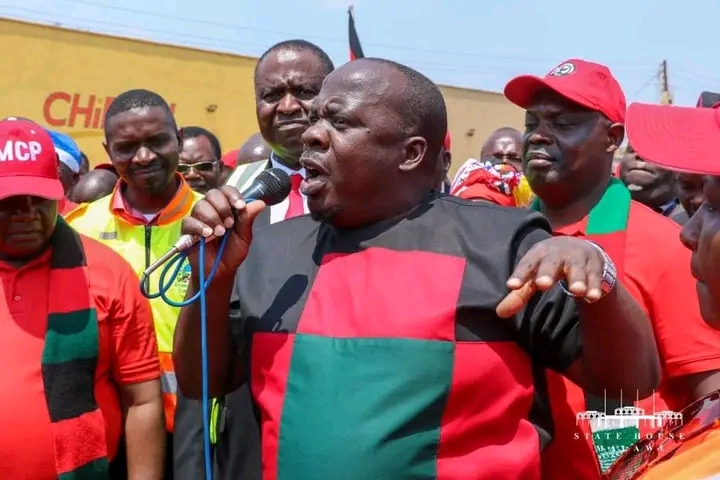
The recent High Court decision to release Malawi Congress Party (MCP) Secretary General Richard Chimwendo Banda has ignited a fiery debate on the nature of justice and power in Malawi.
In a scathing commentary, human rights advocate Edward Kambanje argues that the court’s ruling underscores the reality that law often follows power rather than morality.

“Philosophically, it means law follows power more than morality,” Kambanje said, highlighting the inherent inequalities within legal systems.
Kambanje points out that justice, though an ideal of fairness, is often skewed by social inequalities.
“Wealth buys time, defense, and influence, so the rich experience law as negotiation while the poor experience it as punishment,” he noted, implying that Chimwendo Banda’s release exemplifies this disparity.
The human rights advocate also raised concerns about selective justice, questioning the court’s stance on others languishing in jail on remand without being heard.
“Selective Justice is real, what’s the court position on others behind bars on remand and are rot in jail without being heard?” Kambanje queried, calling for a more equitable application of justice.
Chimwendo Banda was released after the High Court ruled that his continued detention was unlawful and unconstitutional.
The court has since scheduled an inter-parties hearing for January 23, 2026.